
FREE GUIDE: How to design your tea garden
I started my tea garden journey on a whim that involved some self-seeded lemon balm and a small patch of weeds in my garden. I was learning about the benefits of medicinal herbs at the time- learning about plants that can support our general wellness, especially through the seasons. This really opened my eyes to the world of teas and how we use teas to support our health. My family didn’t need a complex medicinal garden but having some herbs available year round that support us through the seasons, that soothe our nervous systems (for the kids and myself) and that connect us to nature seemed like a great idea.
So in this blog I wanted to share some of the things I have learnt along this journey and why I think everyone needs a tea garden, even a tiny one.
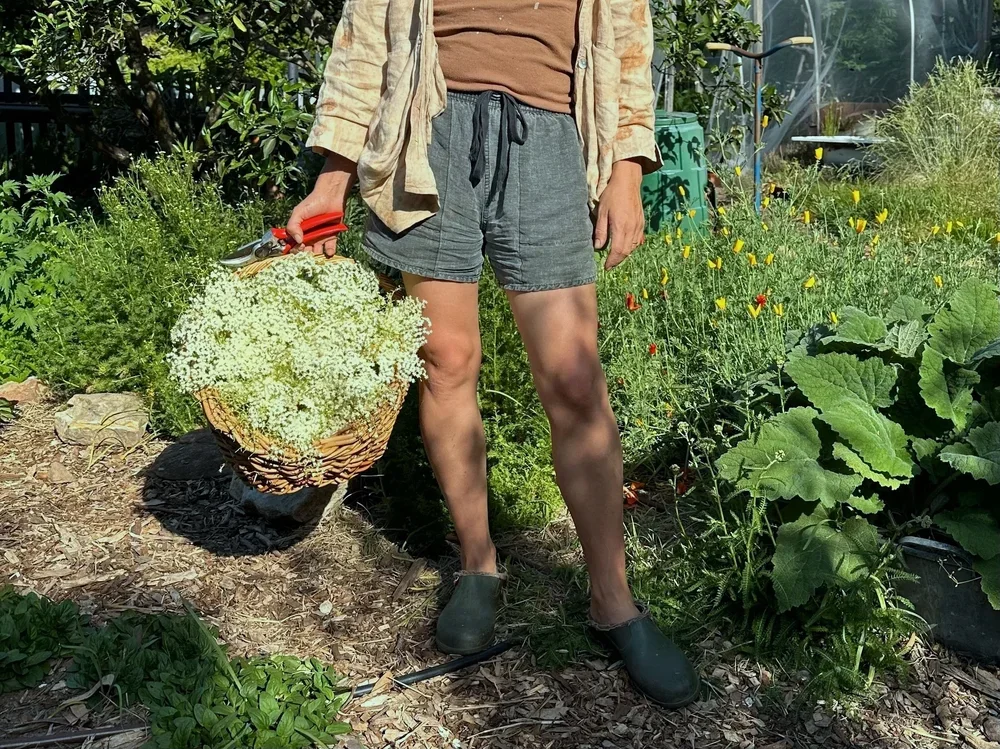
Why grow a herbal tea garden?
It’s easy and looks great
One of the great surprises for me was just how stunning my tea garden became once the plants had established themselves. Despite having too many plants for such a small space (I was trying to fit in as many tea herbs as possible) they seemed to work really well together and, unlike my veggie bed, they didn’t need constant care and attention to grow well and look good. An added bonus here are the delicious aromas you get when brushing past the plants or when you crush a leaf in your hand.
Sometimes I grow veggies and don’t end up harvesting them before they are too far gone and I have to feed them to the compost. Not so with my tea garden, especially the perennial plants. Whether or not I actually use the plants, the garden grew into a beautiful place where all the pollinators flocked. My chamomile was literally covered in lady birds.
More benefits from fresh plants
A huge benefit from actually growing tea rather than simply purchasing tea from the store is how beneficial they are when used fresh. Whenever you dry a plant, especially aromatic plants, you lose a lot of the beneficial compounds in the drying process. Add to this that most herbs you buy in teas have likely been stored dry for a long time and now it’s almost like drinking flavoured water. This is more true for some plants than others. For example, Skullcap loses 50% beneficial compounds when you dry it. If it has been stored for over a year you are left with around 30% of its full potential. That is huge!
Reduce carbon foot print and more eco friendly
As we continue to try to reduce our impact on our planet, our home, growing our own tea can play its part. Not only does growing tea reduce carbon footprint but it means no micro plastics, no tea bag dyes and no pesticide or other chemicals used to grow monocrops. Practically, this can be as simple as growing a small bed of peppermint and suddenly, you have fresh peppermint tea at your fingertips.
Mental health benefit
There has been so much recent research into the benefits of getting your hands into the dirt, getting outdoors and connecting with the world around us. This includes the immune system strengthening from being outside in the sunshine and all the microorganisms in the earth. Incidentally, as our gut plays a huge role in our mental and emotional health, these microorganisms also play a role there. Spending time in nature, especially intentionally, has been shown to improve mood and anxiety, and energy. It also improves memory, cognition, creativity and all the other physical benefits that come with doing active work such as gardening.
Imagine looking out into your garden, your potted verandah or window sill and there you see lush green leaves, maybe some dainty mauve flowers and a bee bumbling by as you pick a few leaves for your morning tea. You inhale the strong peppermint scent while the tea steeps, so much stronger than the dried tea bags you used to use.
In this way drinking tea becomes a mini mindfulness activity, a daily ritual of quiet, slow intention. Starting your day in this way can set the tone for managing the stressors of the day and creating a place of calm that you can return to when needed.
Seasonal rhythm
As humans we have lived alongside the rhythms of nature for nearly all of our existence. Our diet was seasonal and based on what could be stored and preserved, our daily life was aligned to the sun and throughout the year the seasons marked different periods of activity in the garden, festivals to be celebrated and jobs to be done around the home. Having a tea garden (or any type of garden really) brings us into connection with the seasons of the year such as sowing seeds or harvesting when plants are just about to bloom. When we garden we are outside and become aware of what birds are around at different times, what flowers are in bloom in the bush and how the weather is shifting.
When we grow a garden we also can grow plants that support us through these different seasons. We can grow herbs to assist with seasonal allergies or plants that we can transform into brews that will carry us through the cold and flu season. Throughout the seasons our nervous system needs to remain in balance and be able to adjust to life events and shifting seasons. The nervine class of herbs are an amazing addition to your tea garden here and there are so many that you can easily grow and harvest at home.
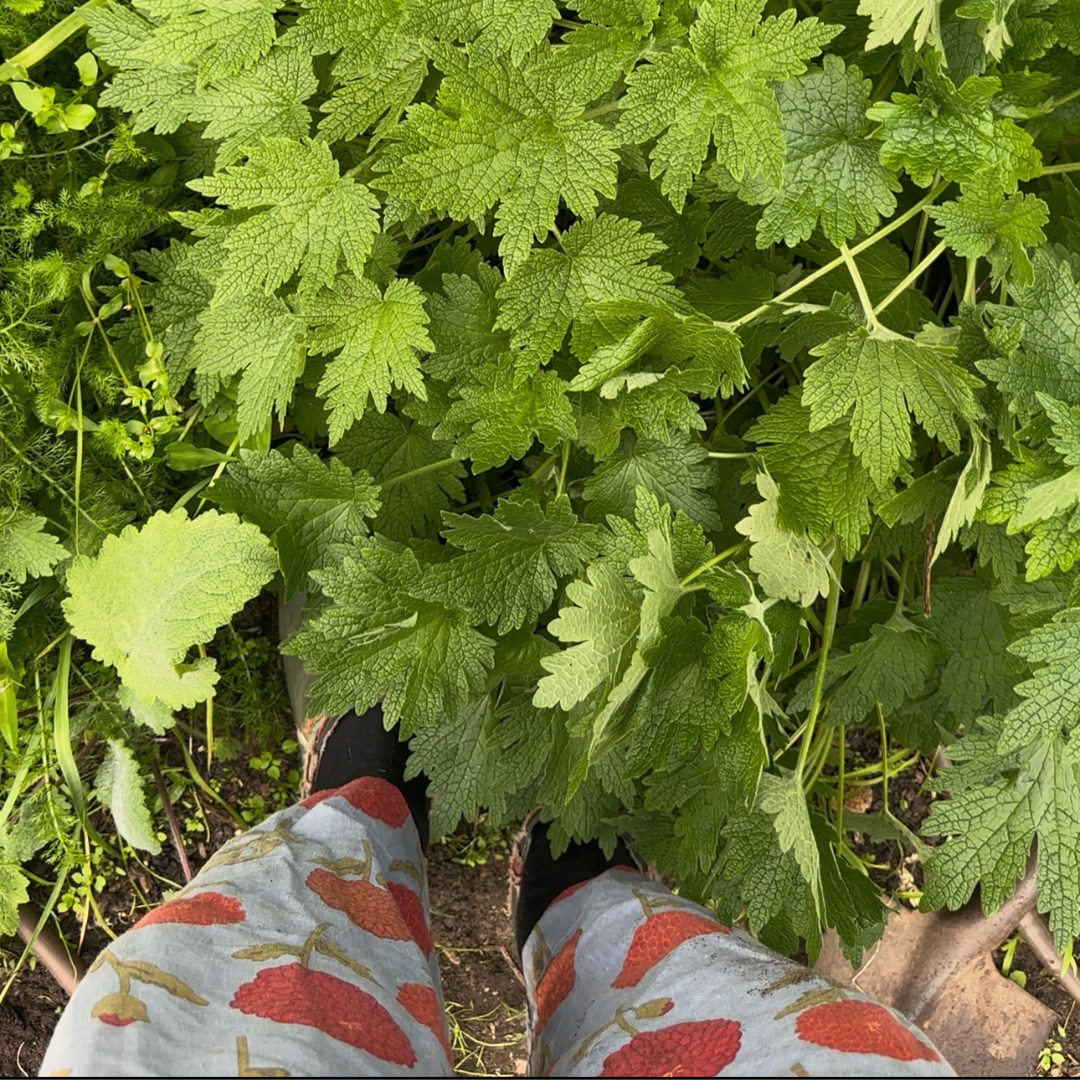
Designing your tea garden
Location
Now that you have been convinced to start a tea garden the question is- where and how big? Some of the answers will depend entirely on your available space and location. For example, if you live in a unit without much light there might some limits to what you can grow but one of the perks of many tea garden plants is that they will grow in pots and many prefer shade (think mints here). The size of your tea garden is unlimited- you can have a productive potted garden, one small bed or fill your entire backyard with delicious plants. You can also easily add your tea herbs into an existing herb or flower patch.
Ideally, to have a wide range of plants you will locate the garden in a sunny spot with 4-6 hours sunshine a day. While mints prefer wet feet most other herbs do not. This may mean raising the bed or planting in containers if you only have a damp spot available.
To make the most of your tea garden, it’s best to plant relatively close to your kitchen so that you can quickly duck out and pick some leaves and also so that you can enjoy the visual feast of your tea garden. For me a tea garden also harks to the European pleasure tea garden which were beautiful spaces to sit, relax and sip tea.
Soil
Happy and healthy plants depend on good and appropriate soil for each plant. You want to aim for well-drained, crumbly soil enriched with compost. Some Mediterranean plants such as lavender and rosemary will prefer drier and sandier soils so it is always best to check the label or do a little research.
One final test to give your plants the best chance is to check the pH of your soil. Some plants can be quite particular but most do will with a neural to slightly alkaline soil (7.0- 7.5). Basic kits can be bought at any garden center as well as any soil amendments.
Adding mulch protects that soil surface, helps to retain moisture and suppresses weeds (huge bonus!). Mulch can be bark, leaf or straw and as it breaks down it will add to the organic matter in your soils creating a healthy soil environment.
Water
Watering your plants is especially important on planting and for a few months afterwards. Many plants can then fend for themselves though they may need occasional watering during dry hot summer periods. Always check the label or do a little research to figure out how much watering will be needed. If you are planting out a larger tea garden it can be more efficient and less time consuming to set up a simple irrigation system that runs on a set-and-forget timer.
When you are outside wearing your plans it is a great opportunity to keep an eye out for pest or disease issues, over or under watering any other amendment that might be helpful.
Design
When planting herbs in a bed that sits against a wall, fence or hedge, always plant the taller plants at the back and the smallest plants at the front. This way all plants get enough sunlight and you can easily see and reach all your herbs. If you are planting in a circular bed, plant the tallest in the middle and work your way out. For spacing always check the labels and planting instructions and plant in either groups of uneven numbers or rows.
Thinking about which plants prefer similar conditions (such as soil, moisture and light) will guide your design. All similar plants can be planted together. It also helps to consider what colours the plant will flower so that you can either clump colours or disperse them through the garden, depending on your preference. Always remember to label your plants until they become more familiar to you so that it is easy to find them and use them on a daily basis.
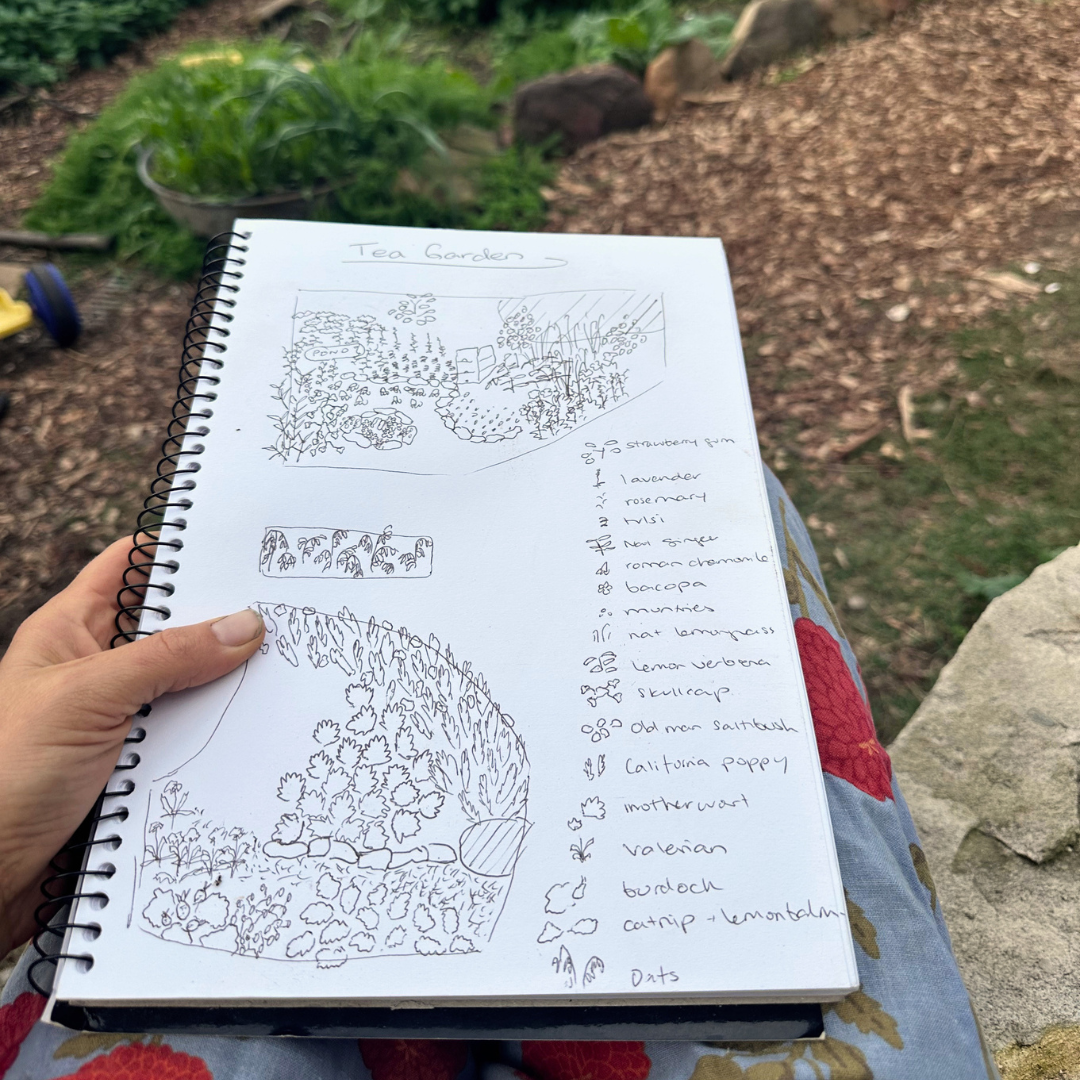
What to grow in a tea garden?
Now for the fun part! When thinking about what plants to grow in your tea garden it can be useful to go to your tea cabinet and have a look at the labels of all your favourite tea blends. What plants do you recognize and which pop up the most in your favourite teas?
The next thing to consider is what benefits do you wish to get from the brews you make. Do you want nervous system support or seasonal support? Do you want to be able to give these teas to your children to support their needs? Or do you want yummy teas that also taste delicious as iced teas for those sweltering summer months? If you don’t have much space, pick just one or two plants that speak to you. Write down your thoughts and choose your plants to fit.
These lists give an overview of my favourite tea herbs that fit all the categories listed above. This list is by no means extensive and you also don’t need to grow all your tea herbs. Pick a few and enjoy spending time with the plants in the garden and as a daily calming tea ritual.
The list below is quite extensive though by now means comprehensive. To begin with just pick a few (or one!) that you already love and drink in your bought tea. Most of these plant will be readily available at you local garden center. However some will be a little more tricky to find. My online go-to for the more tricky to find seedlings are Happy Vally Seeds, All Rare Herbs and Herbalistics.
-
Tea Plant- Camellia sinensis
Red clover- Trifolium Pratense
Echincea- Echinacea purpurea
Nettle- Urtica dioica or our Native Nettle- Urtica incisa
Calendula- Calendula officinalis
Thyme- Thymus vulgaris
Elderflower- Sambucus nigra
Rivermint- Mentha australis
Yarrow- Achillea millefolium
Bee balm- Mondaria spp.
Other plants that you probably don’t need to grow as they are “weeds” include Plantain, Dandelion, Cleavers, Chickweed
-
Skullcap- Scutellaria lateriflora
California Poppy- Eschscholzia californica
Rose- Rosa rugosa
Lemon Balm- Melissa officinalis
Lemon Myrtle- Backhousia citriodora
Lavender- Lavendula augustifolia
Motherwort- Leonorus cardiaca
Rosemary- Rosmarinus officinalis
Tulsi- Ocimum tenuiflorum
Valerian- Valeriana officinalis
Vervain- Verbena officinalis
Chamomile-Chamaemelum nobile
Bacopa- Bacopa monnieri
Passionflower- Passiflora incarnata
Wood Betony- Stachys officinalis
-
Lemon Balm- Melissa officinalis
Catnip- Nepeta cataria
Lavender- Lavendula augustifolia
Elderflower- Sambucus nigra
Rose- Rosa rugosa
Peppermint- Mentha x piperita
Chamomile- Chamaemelum nobile
Tea plant profiles will be added to the Element Botanica website so check out the resources there for suggestions and other inspiration on connecting with nature and nature journalling.
CAUTION:
Some plants can become weedy in the garden and can also escape the garden into our native bush. The mint family of plants will grow vigorously in the right environment and other plants can also escape the garden if they fruit through birds.
Harvesting
Parts that are harvested for tea can include root, stems, flowers, leaves, fruit, hips, seeds or whole plants. When you harvest will depend on which part of the plan you are harvesting. Head out mid -morning after the dew has dried for leaf harvests. This is when the essential oil, the flavoursome and beneficial part, is highest in the leaf. Flower harvests are usually best done late morning ideally just before they hit full bloom. Root harvests should be done in autumn when the energy of the plant has returned downward. It is best not to harvest a large amount from woody plants such as rosemary or lavender in late summer as the plant will not have enough time to harden off new growth before winter.
That being said, for any perennial plant such as mints and perennial tree leaves, harvesting them fresh is always better than using dried plants. A lot of the flavoursome and beneficial parts of the plant are lost in the drying process which is why growing a tea garden is such an awesome project.
Storing
The best way to store your herbs so that you have a year long supply of tea at your fingertips is either drying or freezing them. Before processing the plants for storage is it best to spray-clean them, especially if you are near a big road.
There is a loss of flavour and beneficial compounds when drying hers so it is important to gently and evenly dry them. This can be done in a dehydrator placing herbs in a single layer until dry. The leaves can then be stripped and placed in an airtight container. You can also use an oven on the very lowest setting and with the door ajar. Check frequently on the progress as you really don’t want your carefully tended herbs to scorch or burn.
You can also air-dry by hanging them by tying the stems together in a dry place out of direct sunlight. Keep them away from the garage or basement as they can take on bad odours. To keep them dust-free you can also place a paper bag around them with holes or slits. To fully dry them will take 1-2 weeks. Make sure you label and date them as dried herbs can look uncannily similar, especially all the different mints.
Once the plans are dry, remove the leaves or flowers and place in an airtight container. You tea containers should be kept out of sunlight in a dry place to keep them tasting great the longest.
Another option for storing your herbs is to freeze them in zip-lock freezer safe bags. This preserves flavours that can get lost in the drying process however this process can bruise watery plants such as Lemon Balm. Larger plants can be chopped and covered with water in an ice cube tray, then frozen. Once frozen they can be removed from the ice cube tray and placed in a freezer safe bag, ready to be used in teas.
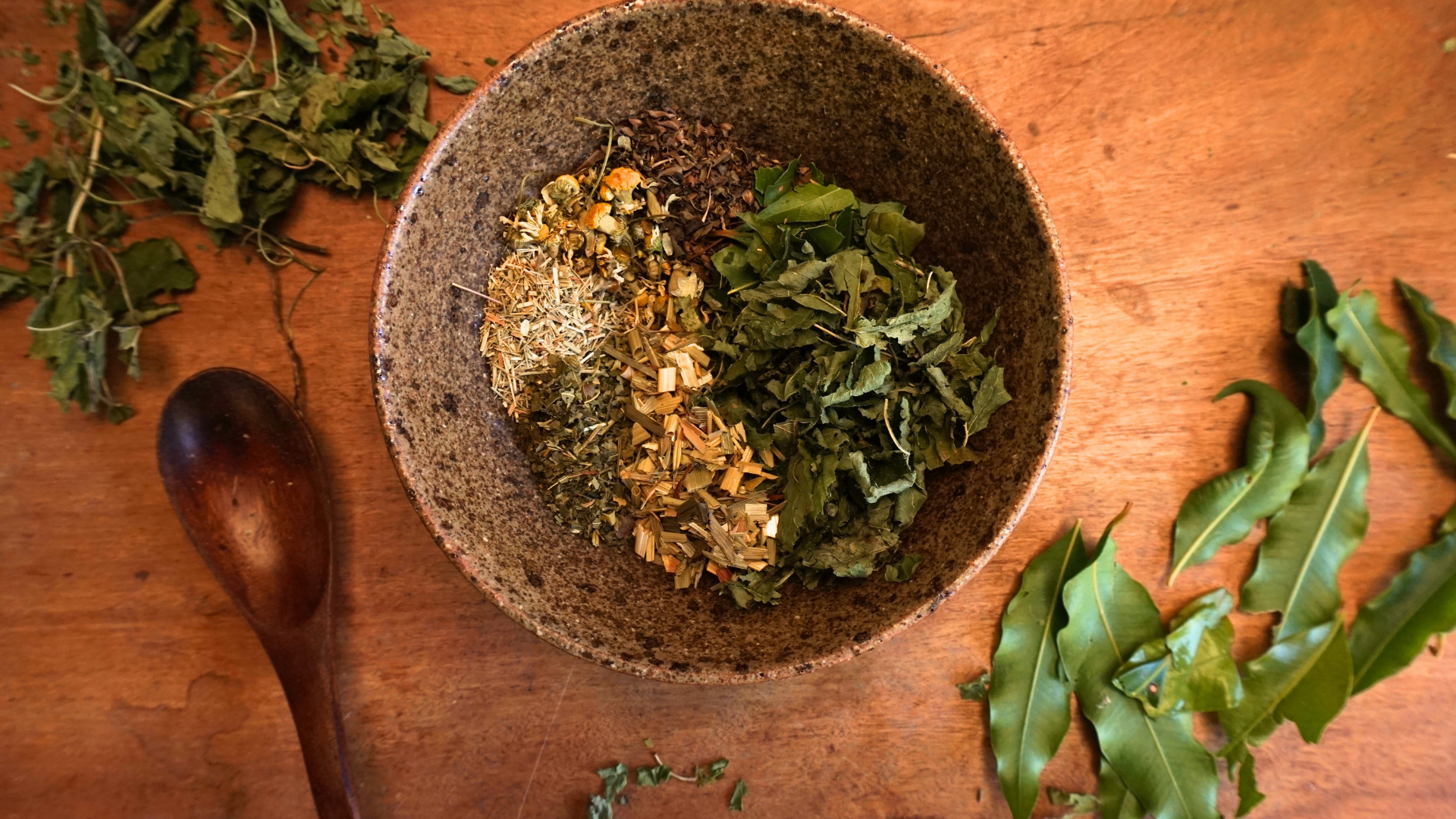
Blending herbs
Blending herbs is an art that is fun and a bit nerdy too. Once you get to know the plants in your tea garden you have a good idea what taste they have, how they can support your general wellness and in which ways they are best enjoyed. Plants can be thoroughly enjoyed as single herb drinks but they can also be blended if you want to create a specific flavour profile or if you want to address specific wellness support. For example, you might want to make a summer iced tea that is sour and refreshing using Rosella and some mints. Or you might want to support your nervous system with a blend of adaptogens for a balanced stress response and a nervine to soothe and relax.
When blending tea it is important to keep it simple and focus on what you want the outcome to be. Choose one plant that is the focus of your blend. Add one or two more for secondary roles. And finally, you might add one plant to adjust flavour or to add a kick that helps to carry the other herbs- either their medicinal use or their flavour.
My favourite way to blend herbs is to walk out into the tea garden, take a few deep breaths and listen to what my body needs. Then I simply walk around and grab a few leaves of this and that without too much thought. Sometimes this turns out deliciously, sometimes not so much. But it is always a moment to be present, observe my body and nature around me. A quick moment that has an amazing ability to center me and has become a habit when I notice my stress level rising or when I need a quick time-out.
I hope you have been inspired to grow some tea, just one pot or plant. And I hope this brief guide has some useful tips to get you started on this journey. I would love to answer any of your questions if I am able to and I would also love to hear about your tea garden projects.